
 By
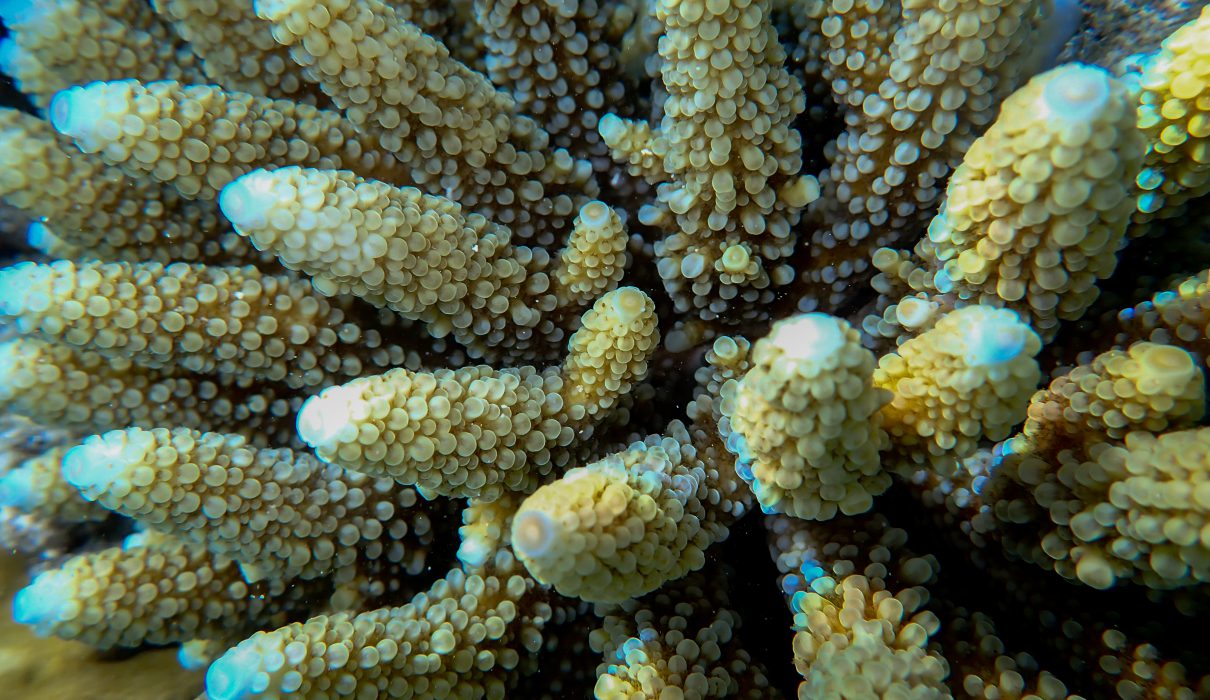
By Acropora gemmifera is a species of reef-building stony coral belonging to the family Acroporidae. It is widely distributed across the Indian Ocean and the Indo-Pacific region and is commonly found on exposed reef flats and upper reef slopes. The species is characterised by its thick, tapering branches and digitate colony form and is an important contributor to shallow-water reef structure. In the Maldives, including Noonu Atoll, A. gemmifera is a common and frequently observed coral species.
Description
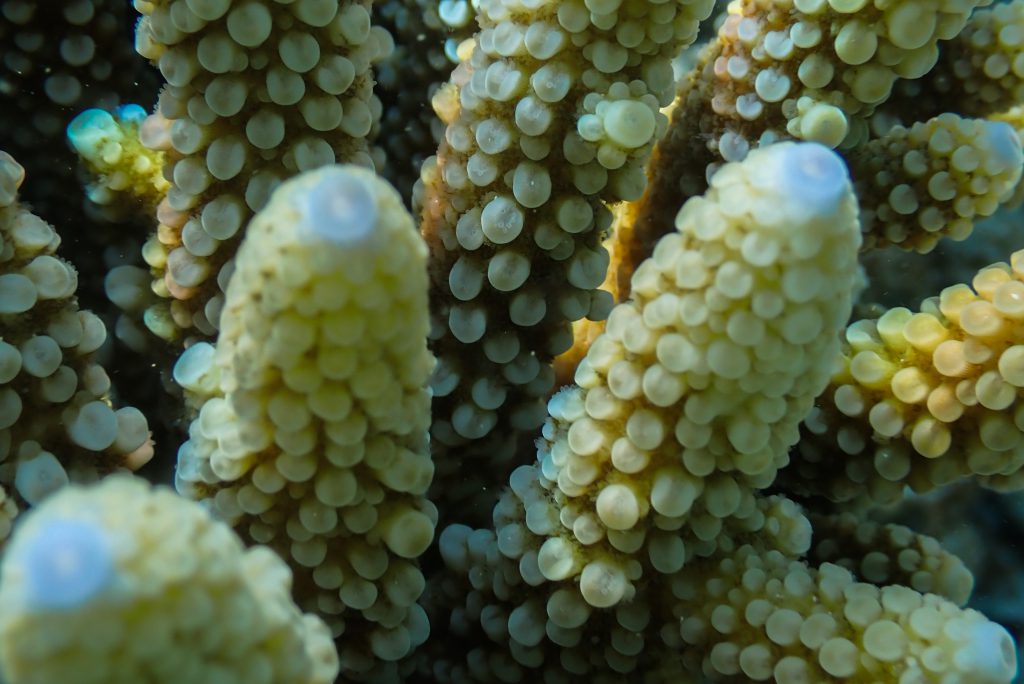
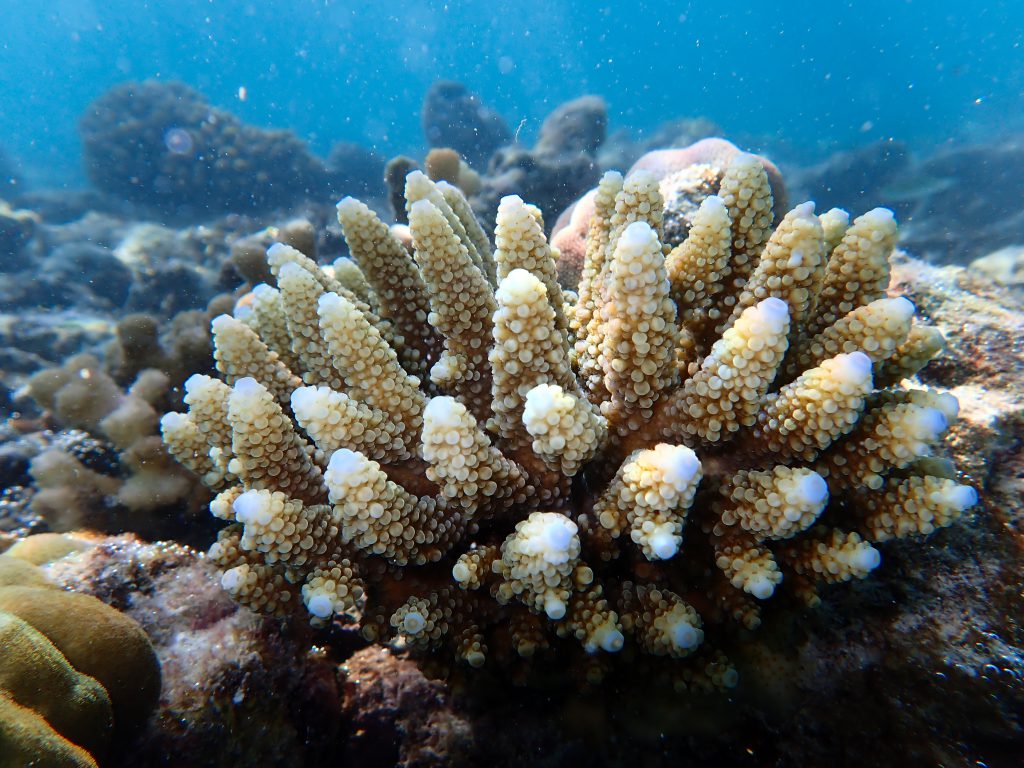
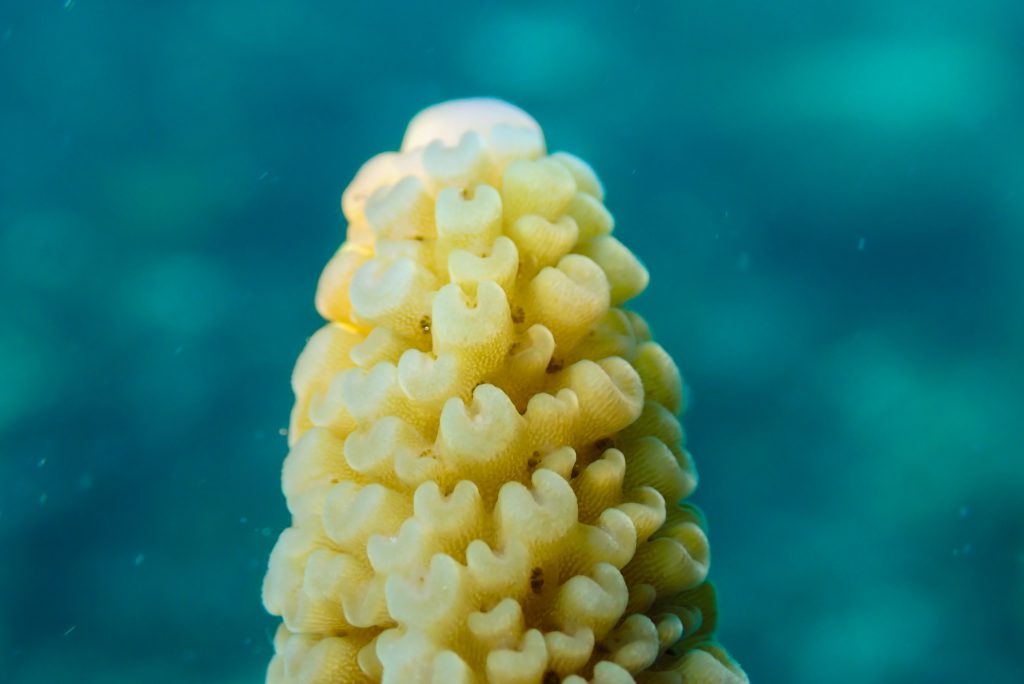
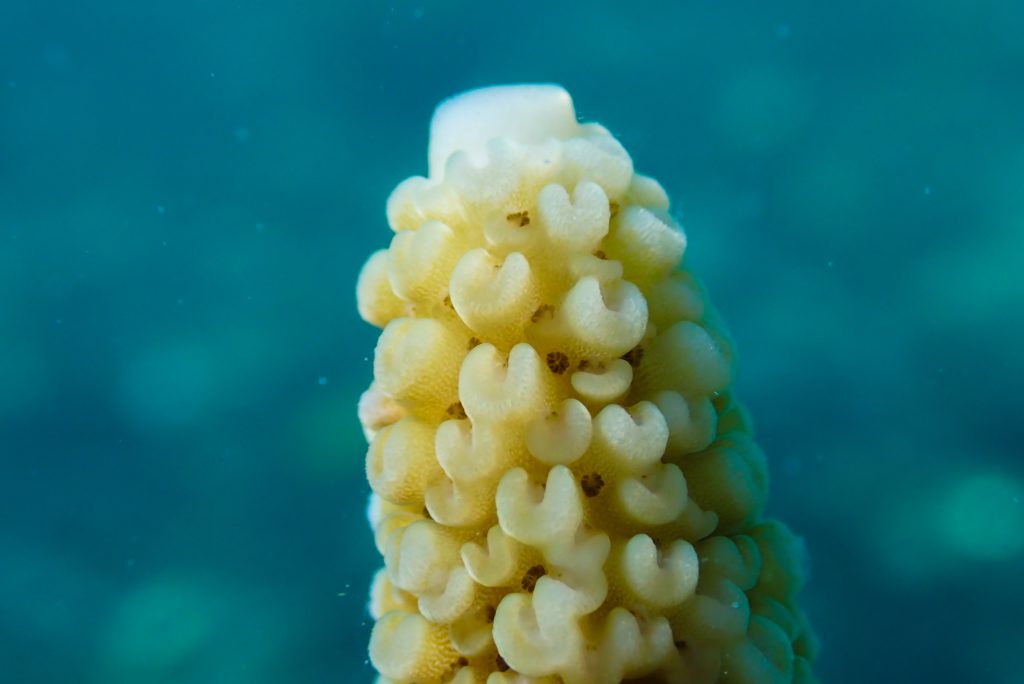
Colonies of Acropora gemmifera typically form digitate structures composed of thick, upright, tapering branches that arise from a common base. The branches are robust and relatively short compared with many other Acropora species, giving colonies a compact appearance. Each branch terminates in a single axial corallite, which is larger and more prominent than the surrounding radial corallites.
The radial corallites are arranged in orderly rows along the sides of the branches and are tubular to slightly appressed in shape. Incipient axial corallites can often be observed near the bases of branches, indicating active growth zones. The skeletal structure is relatively dense, allowing the coral to withstand moderate to strong wave action in shallow reef environments.
Colouration varies widely and may include shades of blue, brown, cream, or purple. The branch tips are often white or pale blue, reflecting areas of active skeletal growth. In some Indian Ocean specimens, the axial corallites have been observed to display a yellowish tint.
Scientific classification
Kingdom: Animalia
Phylum: Cnidaria
Subphylum: Anthozoa
Class: Hexacorallia
Order: Scleractinia
Family: Acroporidae
Genus: Acropora
Species: A. gemmifera
Binomial name
Acropora gemmifera
Brook, 1892
Polyp structure and biology
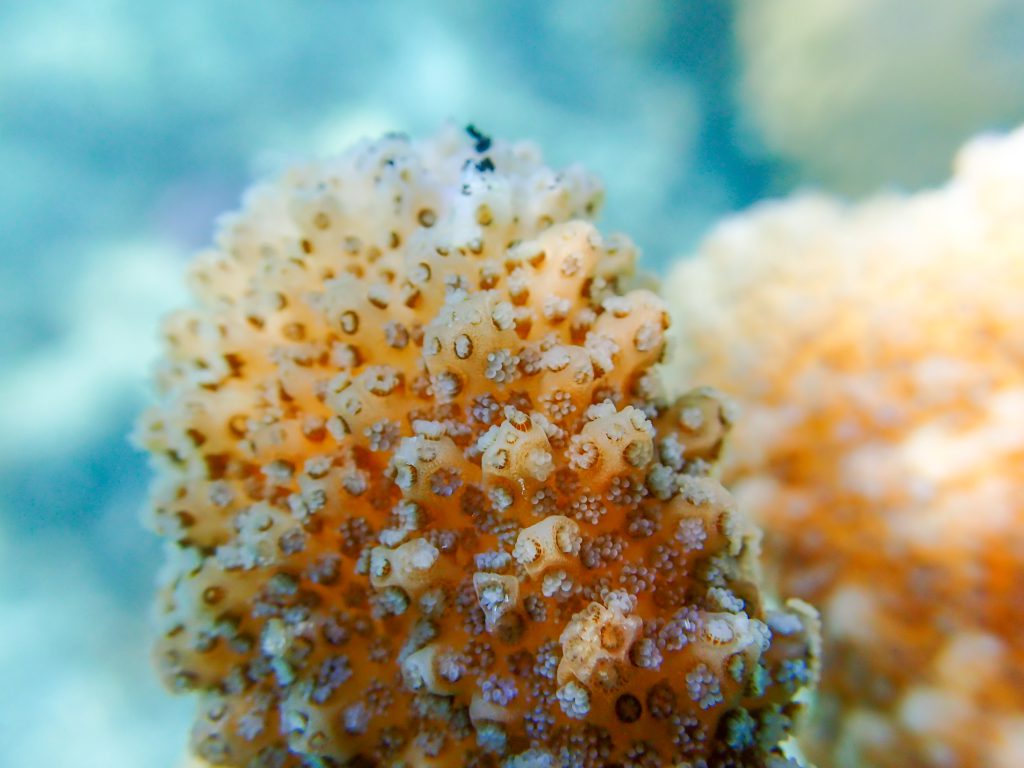
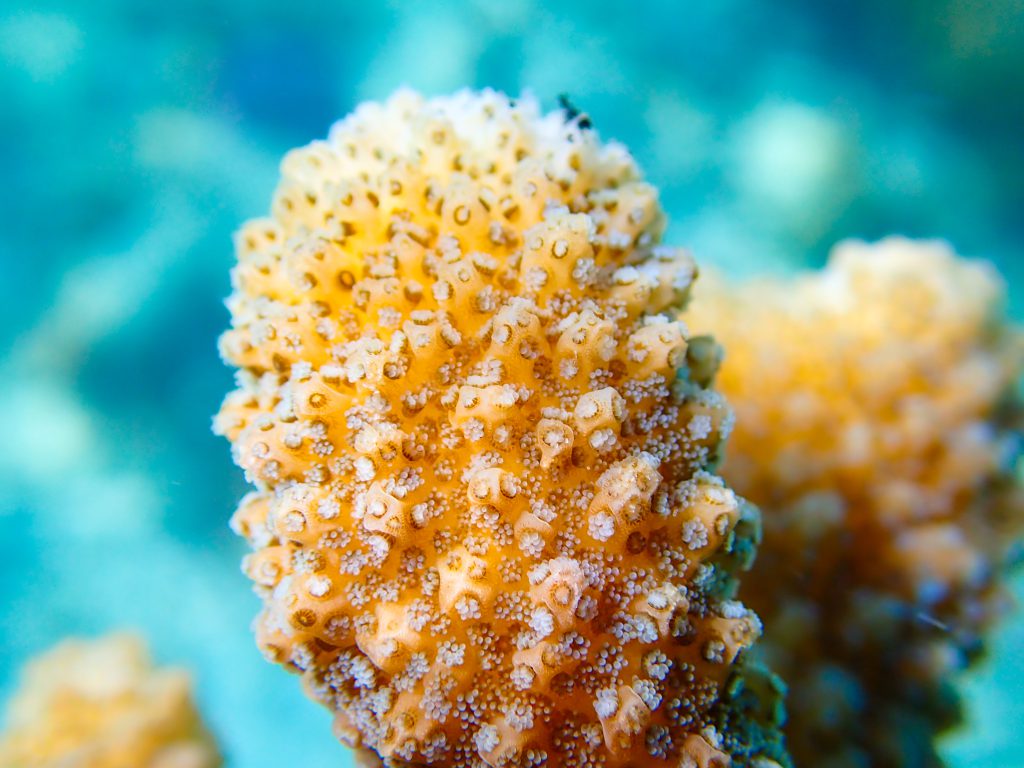
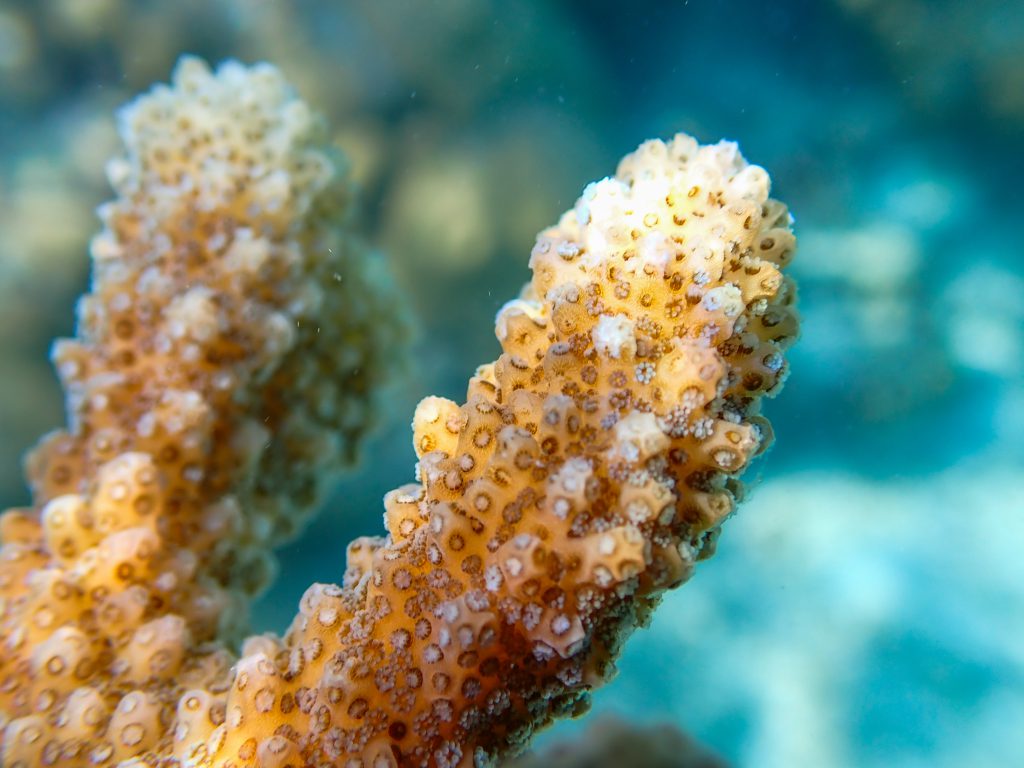
Like other members of the genus Acropora, Acropora gemmifera is composed of thousands of small polyps embedded within its skeletal framework. Each polyp occupies a corallite and consists of a soft-bodied animal with a central mouth surrounded by tentacles. These polyps are small and typically not visible to the unaided human eye under normal reef observation conditions.
At close range and under magnification, the polyps can be seen extending short tentacles from the corallites, particularly during periods of low light. The tentacles contain nematocysts, specialised stinging cells that are used to capture microscopic plankton and suspended organic particles from the surrounding water. Once prey is captured, it is transferred to the mouth for digestion.
The axial polyp at the tip of each branch plays a critical role in colony growth. It is responsible for upward skeletal extension, while the surrounding radial polyps contribute to lateral thickening and branch formation. This division of function allows A. gemmifera to grow rapidly and maintain its characteristic branching form.
Symbiosis and nutrition
Acropora gemmifera maintains a symbiotic relationship with photosynthetic dinoflagellate algae known as zooxanthellae. These algae live within the tissues of the coral polyps and provide the majority of the coral’s energy requirements through photosynthesis. The coral, in turn, supplies the algae with shelter, carbon dioxide, and nutrients, while positioning them in well-lit shallow waters that are ideal for photosynthesis.
In addition to this symbiotic nutrition, the coral also feeds heterotrophically by capturing plankton and organic particles using its tentacles. This combined nutritional strategy supports rapid growth and allows the species to thrive in nutrient-poor tropical waters.
Reproduction
Acropora gemmifera reproduces both sexually and asexually. Sexual reproduction occurs through broadcast spawning, during which eggs and sperm are released into the water column in synchrony with lunar cycles. Fertilised eggs develop into free-swimming larvae that eventually settle on suitable substrate and begin skeletal growth.
Asexual reproduction occurs through fragmentation, a common process in branching corals. Broken branches, often caused by storms or wave action, can reattach to the substrate and develop into new colonies. This capacity for fragmentation contributes significantly to the species’ abundance and its ability to recover after physical disturbance.
Distribution and habitat
Acropora gemmifera has a wide geographic distribution, occurring in the Gulf of Aden, the Red Sea, the central Indo-Pacific, the southwest and northern Indian Ocean, southeastern Asia, Australia, the East China Sea, Japan, the central and western Pacific Ocean, and northwestern Hawaiʻi. It typically inhabits exposed upper reef flats and reef slopes at depths ranging from approximately 1 to 15 metres.
In the Maldives, A. gemmifera is a very common coral species and is found around almost all islands and atolls. It is particularly abundant in Noonu Atoll, including around islands such as Noonu Lhohi, where it frequently forms dense aggregations on reef flats and shallow slopes. These assemblages contribute significantly to local reef complexity and provide important habitat for reef-associated organisms.
Ecological role
As a fast-growing branching coral, Acropora gemmifera plays a key role in reef construction and habitat formation. Its branching structure creates three-dimensional complexity that offers shelter and nursery habitat for small fish and invertebrates. The species is also an important contributor to calcium carbonate production in shallow reef environments.
However, like many Acropora species, A. gemmifera is sensitive to environmental stress and is often among the first corals to be affected by bleaching events and physical damage.
Conservation status and threats
Acropora gemmifera is currently classified as Least Concern (LC) on the IUCN Red List. Despite this status, its populations are believed to be declining in many regions due to the global degradation of coral reefs. Major threats include rising sea temperatures leading to coral bleaching, ocean acidification, pollution, sedimentation, destructive human activities, outbreaks of the crown-of-thorns starfish (Acanthaster planci), and coral diseases.
The species is listed under Appendix II of the Convention on International Trade in Endangered Species of Wild Fauna and Flora (CITES), which regulates international trade to prevent overexploitation.